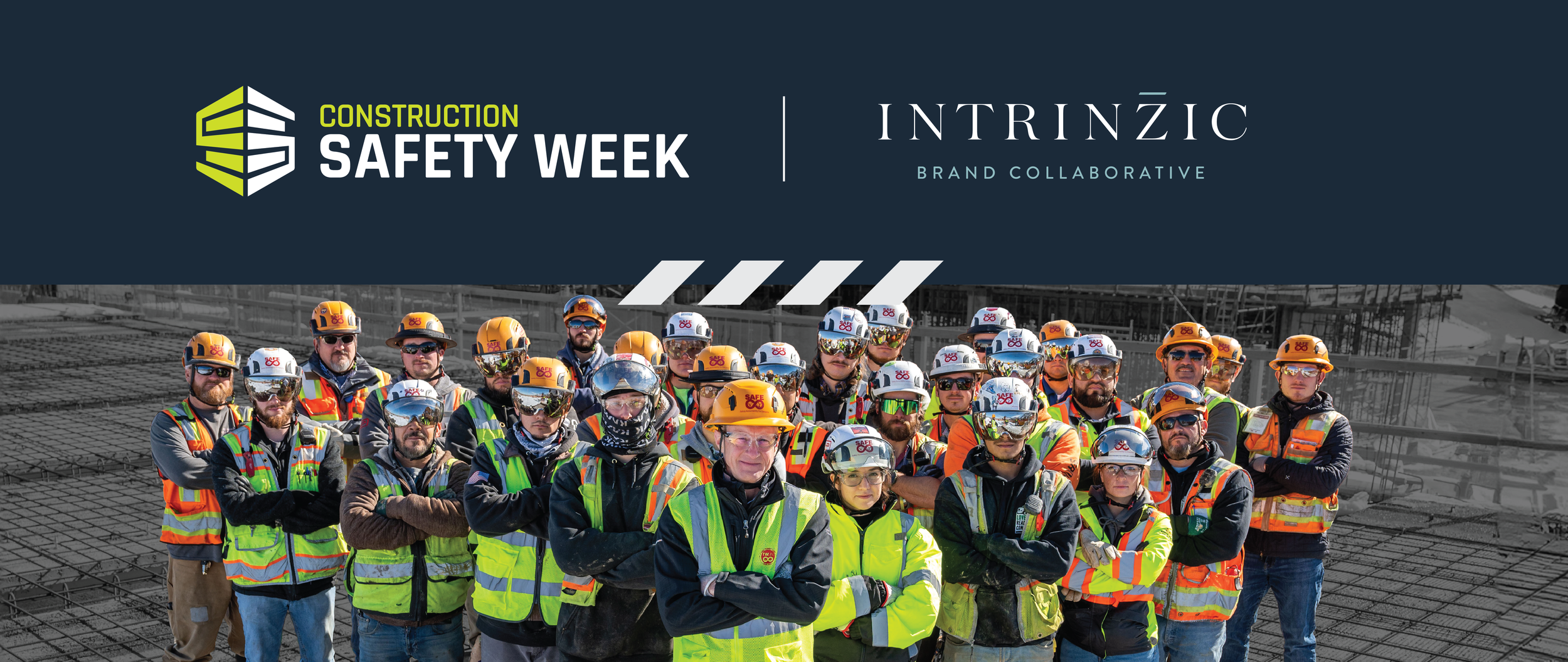
Ten things we learned over ten years working on Construction Safety Week.
Over the past decade, Intrinzic has been the driving force behind Construction Safety Week, helping the nation’s leading construction and infrastructure companies unite around a shared commitment to safety. In those ten years, we’ve had a front-row seat to a powerful cultural shift across the industry. From evolving safety standards to a renewed focus on workforce wellbeing, leadership, and pride in our craft, we’ve witnessed how culture can transform companies and elevate the entire profession. Here are ten of the most important lessons we’ve learned from a decade at the heart of Safety Week.
Safety as Culture, Not Compliance

Safety used to be a checklist. Today, it’s a core value. Companies now understand that culture drives behavior, and that fostering a safety mindset at every level leads to better outcomes and stronger teams.
A New Focus on Mental Health and Wellbeing

What was once a taboo topic is now front and center. Mental health, stress and substance abuse are finally being addressed openly, as companies embrace the idea that emotional wellbeing is part of safety and critical to workforce sustainability.
Recruiting as a Branding Problem

The talent shortage has reframed recruitment. It’s no longer about filling roles, it’s about building a reputation that attracts the next generation. Culture, pride, purpose and visibility now play a much bigger role in a company’s ability to attract skilled workers.
Pride in Craft is Making a Comeback

There’s been a cultural reawakening around the value of skilled trades. Companies are investing in storytelling, mentorship and branding that celebrates the craft and elevates construction work as a career of purpose and prestige.
Embracing Diversity and Inclusion

Diversity was once treated as a checkbox, now it’s becoming a competitive advantage. Leading firms are making real efforts to create inclusive workplaces, not only for women and underrepresented minorities, but also across generations and backgrounds.
From Project-First to People-First Leadership

Construction has traditionally been project driven. But over the past decade, there’s been a shift toward people-first leadership. There’s more emphasis on communication, culture and long-term retention. Great leaders are now expected to motivate, not just manage.
Technology is Changing the Jobsite — and the Worker Experience

Drones, AI, BIM and wearable tech are reshaping how work gets done. But more importantly, technology is influencing how workers experience their jobs. This includes involvement in everything from onboarding and training to daily workflows and performance tracking.
The Shift from Hard Hats to Safety Helmets

A clear visual and cultural symbol of change, many companies have adopted advanced safety helmets over traditional hard hats. This move reflects a deeper cultural shift toward proactive safety, not just compliance. The helmet is more than PPE, it’s a signal of a new mindset.
Integration Between Office and Field

There’s been a cultural evolution in how office and field teams collaborate. Many companies are breaking down silos, using digital platforms and shared values to unify teams, create more fluid communication and reduce friction between planning and execution.
Brand and Story Matter More Than Ever, Both Internally and Externally

In the past, brand was just what showed up on signs and trucks. Today, it’s how companies differentiate in recruiting, sales and community engagement. The best brands are built from the inside out, rooted in culture and expressed in everything they do.
See Safety Week in action
Every Great Brand Starts with a Conversation
We'd love to hear what you're building. Tell us a bit about what you’re looking for.