Why a Narrative-Led Messaging Framework Creates More Meaningful Connections

Here at Intrinzic, we take developing a messaging framework pretty seriously. We know, and fully embrace, the impact that strategic brand messaging has on brand development, brand positioning, and marketing campaigns.
In an increasingly crowded and noisy marketplace, the brands that stand out aren’t necessarily the loudest ones, they’re the ones that tell the most meaningful stories. That belief is the reason why one of our core principles is to be uniquely narrative-led.

Our brand messaging process and approach are rooted in questions, conversations, and telling the full story.
Rather than jumping straight to taglines or campaign headlines, we start by uncovering what truly matters to the brand, to its audiences, and to the larger cultural or market context it operates within. We determine how best to craft and unfold key moments and compelling arguments that work over a period of time to engage and persuade a brand’s target audiences. This long-view approach allows our messaging framework to evolve naturally, creating cohesion and momentum rather than one-off ideas that fade quickly.
We also understand the vital role that highly relevant messaging plays beyond marketing or sales. Strong brand messaging helps build a shared internal language, reinforces purpose, and strengthens corporate culture. When employees are a part of the narrative, they become more confident ambassadors for the brand. Externally, narrative-led messaging shows how your brand relates to its audiences and the marketplace, clearly articulating not just what you do, but why it matters.
When we partner with a client to build a messaging framework or marketing campaign, our main goal is to ensure that the right message is delivered at the right moment through the right channel.
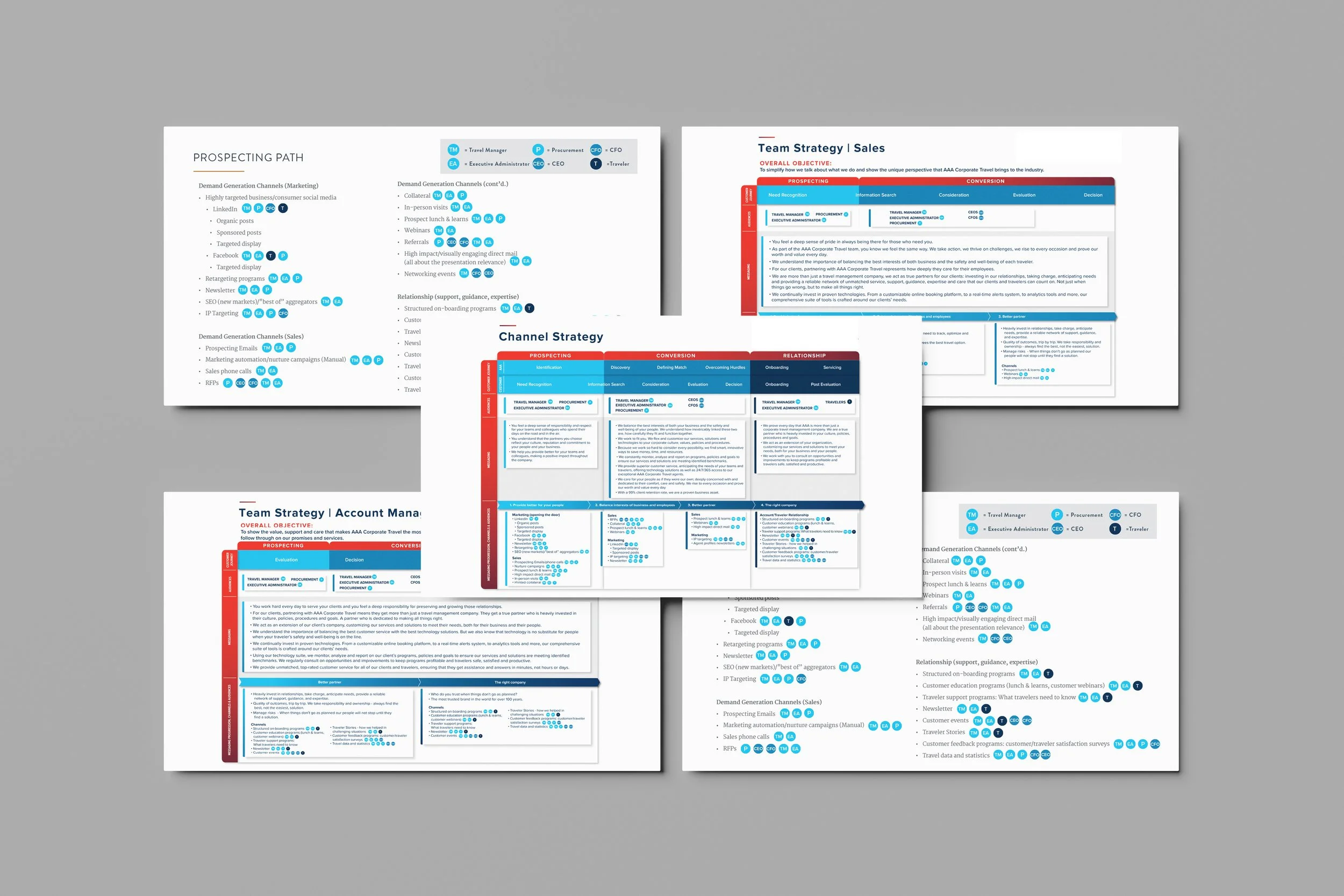
Creating messaging consistency while aligning these three components is crucial to activating a successful campaign. A powerful message delivered at the wrong time, or through the wrong platform, quickly loses its impact. Likewise, inconsistency in the delivery of the message and across the messages themselves is a major factor in underperforming campaigns. Our messaging framework also creates consistent, compelling language for brands to use across platforms in order to deliver crucial insights. Achieving this alignment requires more than marketing intuition—it demands a thoughtful, strategic approach that champions language, messaging, and a deep understanding of audience motivations, behaviors, and expectations.
This is where our narrative-led methodology becomes a competitive advantage. By viewing campaigns as stories with a beginning, middle, and end, we can guide audiences through a journey rather than pushing them toward a single transactional moment. Each touchpoint builds on the last, reinforcing the narrative and strengthening emotional connection over time.
We have honed our approach to help us glean the insights needed to craft more powerful stories, more compelling benefits, and more actionable messages.
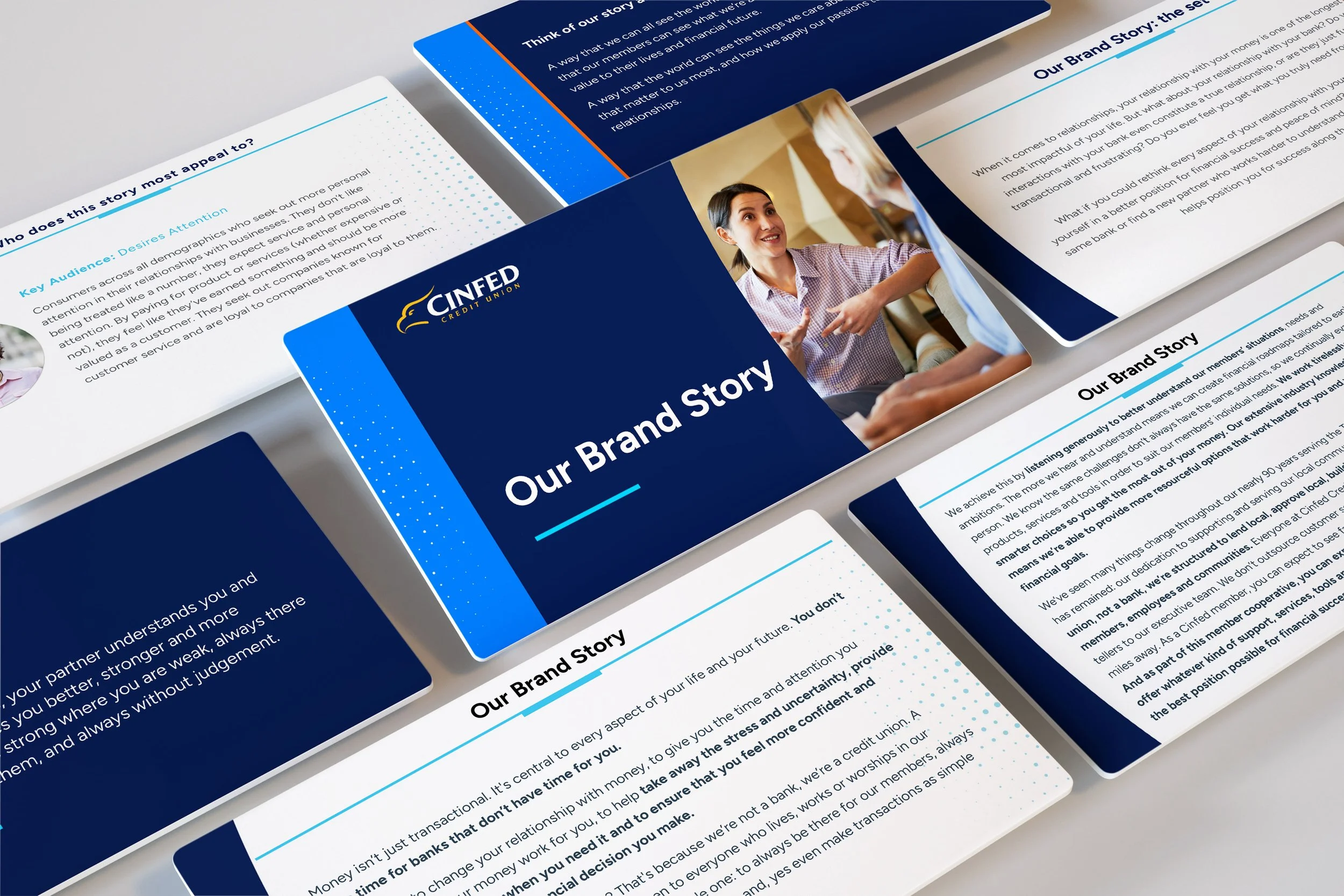
Similar to our brand development process, our approach to developing a messaging framework hinges on finding ways to truly connect brands to their target audiences through insights that resonate and, ultimately, build movements.