Why Rebrands Fail: The Crucial Role of Brand Alignment and Culture

Let’s set the scene: you and your team have recently completed a rebrand. Your brand has a sleek new logo and graphic toolbox, updated messaging, and a plan to roll it out to every piece of marketing collateral.
A few months go by. The rebrand buzz has worn off, and things aren’t going the way you thought they would. You notice things like:
Your employees seem confused—or worse, apathetic—about the new brand.
Your website hasn’t been updated beyond the homepage.
Customers aren’t sure which version of the brand is the current one.
Some customers may even be outright enraged by the new brand.

This is a situation that plays out far too often after a rebrand. In fact, research suggests that up to 40% of rebrands fail*. But the reason behind rebranding challenges might not be what you think: rebrand failure isn’t due to lackluster graphic design; it’s due to focusing on a new look without a clear strategic plan.
When a rebrand falls short of expectations, the question is always why? Where did things go wrong and what can be done to save it, without getting stuck in a cycle of rebrand-fail-rinse-repeat?
Often, the culprit is that the rebrand focused solely on a visual update, rather than a strategic repositioning. This is an easy mistake to make. Another common mistake is rooted in the rebrand process: what kind of internal team did you assemble and what approach did your internal team take?
Rebrands often fall short of expectations, failing to deliver on the performance or adoption that leadership was hoping for. Identifying the main source of the friction can feel like trying to find a needle in a haystack. How do you find the outage between the big reveal of the new brand and the slow backslide away from all it promised to be?
There are two distinct sides to this rebrand failure coin. Understanding them is crucial to knowing how to make the most of a rebrand and ensure its success in the months and years to come.
Let’s explore them.
The Internal Rebrand Fail: When the Problem is a Lack of Employee Engagement and Adoption.
You cannot manage what you don’t know.
While this quote is most often applied to understanding and using data, it can be applied to brand as well: employees who are not trained and indoctrinated on a brand, or in this case, a rebrand, cannot become its champions. Even the most strategic and well-thought-out rebrands can fall flat after launch if the rollout plan lacks ongoing training and support for internal teams.
Brand is not a set-it-and-forget-it system. Brands are living things, and like living things, they are ever evolving. Implementing ongoing brand training ensures that the brand and the culture stay closely connected to one another. Here are some trainings and tools that can help ensure this connection stays strong:
Solution #1:
Engage in Cultural Immersion Training
Culture and brand are inextricably linked: strong cultures beget strong brands.
Employees are an integral part of your brand’s living system. When employees are included in the rebrand process, they will be invested in its ongoing success. This translates literally in earnings as Gallup* research has shown that companies with engaged workforces have higher earnings per share (EPS).
Make your employees part of the rebrand process by:
Hosting discussions and roundtables for every team
Include employees from every level of the company
Invite them to share their passions and pain points: what do they love about their work? What would they love to see done differently?
This doesn’t mean you try to position the rebrand to please everyone; it means you find the most common, shared threads and bring those to the forefront of your brand.
Solution #2:
Build an Employer Brand
Strong brands attract (and retain) strong talent. An Employer Brand clarifies to prospects who your organization is, what you’re about, and helps identify those with similar values and views who will align well with your company culture and business goals.
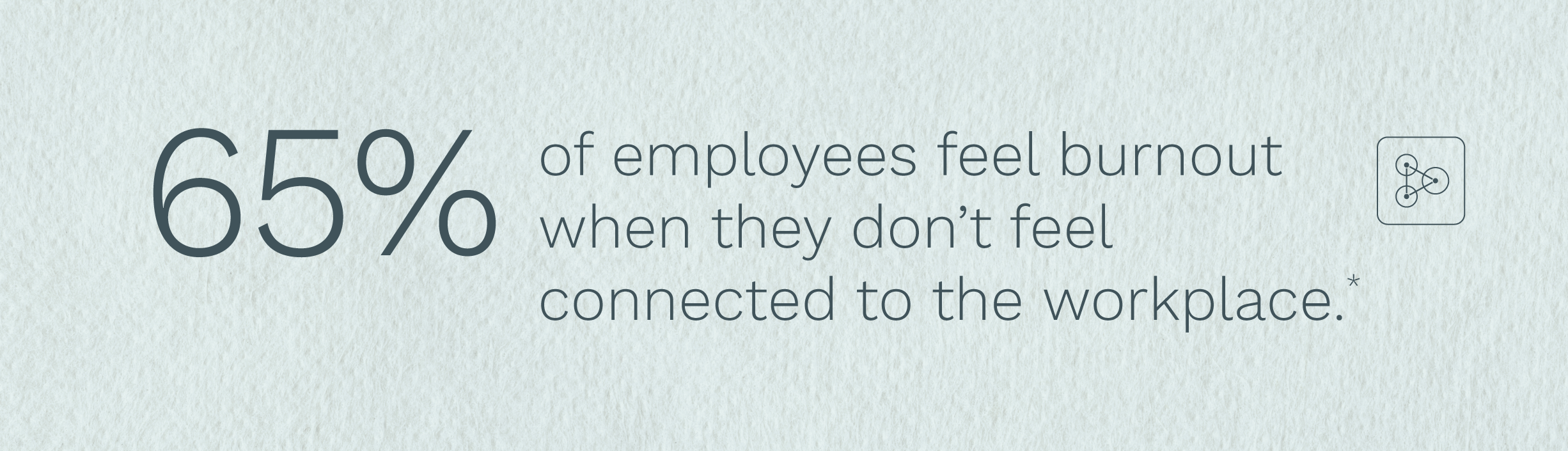
According to Glassdoor, 65% of employees feel burnout when they don’t feel connected to their workplace. Feeling engaged in and connected to the brand positively impacts an employee’s day-to-day interactions and team contributions.
An Employer Brand helps connect brand promise to employee performance by informing benchmarks for performance reviews and building metrics that align current employees to company culture and goals.
Solution #3:
Invest in Employee Recognition
Invested employees are dedicated employees. Through ongoing culture-building, brand activation and employee recognition—all rooted in the rebrand positioning—teams see how they are nurtured, valued, and a crucial part of the brand promise.
The External Rebrand Fail: When the Problem is Lagging Market Performance
Now let’s flip to the other side of the coin: why rebrands fail externally.
When performance falls short of expectations, rebrands are often viewed as a failure. But here’s the hot take: a new logo is not a magic wand. It doesn’t dazzle the marketplace by suddenly turning all your pumpkins into six-figure sales. You still need to put in the work: to reassure your core audience, educate the outliers, and ensure that all external communications and collateral are properly expressing your new brand positioning.
The first order of business is to assess all external-facing materials. Not just to make sure that the logo has been updated, but that all media and collateral reflect your brand’s values and positioning. This includes:
Website strategy (what are you communicating to the market)
Updated website (not just the homepage, every page should reflect the positioning and story)
Printed brochures and marketing materials
Social media content strategy
Templates and graphics
Introducing or revealing your rebrand to the market takes some strategic considerations. Unless your goal is simply to get view and shares, replacing all of your social icons with a new logo and leaving it at that is sure to create a virtual firestorm. Consider the backlash from: every single time that Gap has rebranded, Twitter’s descent into X, and the infamous Cracker Barrel logo reveal of 2025
Solution #1:
Conduct a Website Content Audit and Build a Messaging Strategy
Simply ensuring visual consistency across touchpoints is not enough to sustain a rebrand within its competitive market.
One of the keys to launching a successful rebrand is based in strategy and content:
Is every touchpoint telling the brand story and building a more significant presence for your brand?
Is your content strategy aligning the market to your brand?
Are you delivering relevant audience-aligned messages at the right moments through the right channels?
Successful rebrands include a strategic messaging framework for bringing relevant and actionable messages into the market that accurately capture the brand’s points of difference in ways that resonate with target audiences.
READ NOW: IGNITE THE POWER OF YOUR BRAND MESSAGING STRATEGY —
Solution #2: Walk the Talk
Make sure your customers’ experience live up to your brand’s promise. In other words, you’ve got to walk the talk.
This is part of the point above: are you delivering relevant and compelling audience messages at the right moment throughout all parts of the sales process. If the majority of the rebrand focus is on getting new customers in the door, and not on sustaining a high-quality experience at every touchpoint, then brand performance is likely to suffer in the mid- to long-term. Every customer experience, at every moment in the sales and retention process, should be delivering the brand promise.
Brand Alignment = Brand Success
When rebrands fail, it’s easy to point fingers at the design and execution. It’s certainly easier to blame a designer than to accept the blame that the team jumped to execution before exploring the best strategy for the brand.
As a living system that changes and evolves as its people and market change and evolve, brands require continuous care and attention. Building and aligning to a strategic foundation as part of a rebrand ensures your brand has strong pillars to support a bright, successful future.