Why Company Culture is Becoming a Competitive Advantage in Construction
Construction has always been a demanding industry. Tight schedules, thin margins, labor shortages, and increasingly complex projects create constant pressure for companies to perform. At the same time, the industry has become more competitive than ever. Many firms offer similar capabilities, experience, and technical expertise, making it nearly impossible for companies to differentiate themselves based on qualifications alone.
Yet some companies stand out—delivering quality projects on time and under budget more consistently, boasting lower incident rates, and attracting top talent without aggressive bidding wars. What’s their secret?
One of the most underestimated, often overlooked and underutilized business differentiators in construction: culture.
In an industry built on relationships, trust, and execution, culture is increasingly becoming the factor that determines which construction companies attract the best people, perform at the highest level, and build lasting reputations. That’s why more and more construction leaders are starting to recognize something very important in today’s landscape: culture is not simply a feel-good HR topic or secondary business initiative. It’s the ultimate competitive advantage.
Culture is not a buzzword. It’s a business essential.
3 Benefits That Strong Company Culture Bring To Construction
In highly-competitive industries like construction, culture is a critical component in every company’s infrastructure. It’s not defined by mission statements or posters on the wall. It’s reflected in the collective values, behaviors, and norms that guide how your teams interact, make decisions, build relationships, prioritize safety and approach challenges on the jobsite and in the office. From attracting skilled talent to improving project performance and strengthening reputation, a strong construction company culture has the power to influence not only how companies operate, but how they grow, recruit, innovate, and retain trust.
Companies that cultivate, nurture and prioritize culture strengthen engagement, enhance collaboration, and create the adaptability needed to thrive in an evolving high-stakes marketplace. That means it the most valuable tool in your growth strategy arsenal, the intangible advantage that translates into tangible wins.
Let’s look at a few key areas where culture directly impacts performance and outcomes in the construction industry.
1. Talent Attraction & Retention
In an industry that’s heavily reliant on skilled labor with chronic shortages, construction companies are no longer competing only for projects—they’re competing for people.
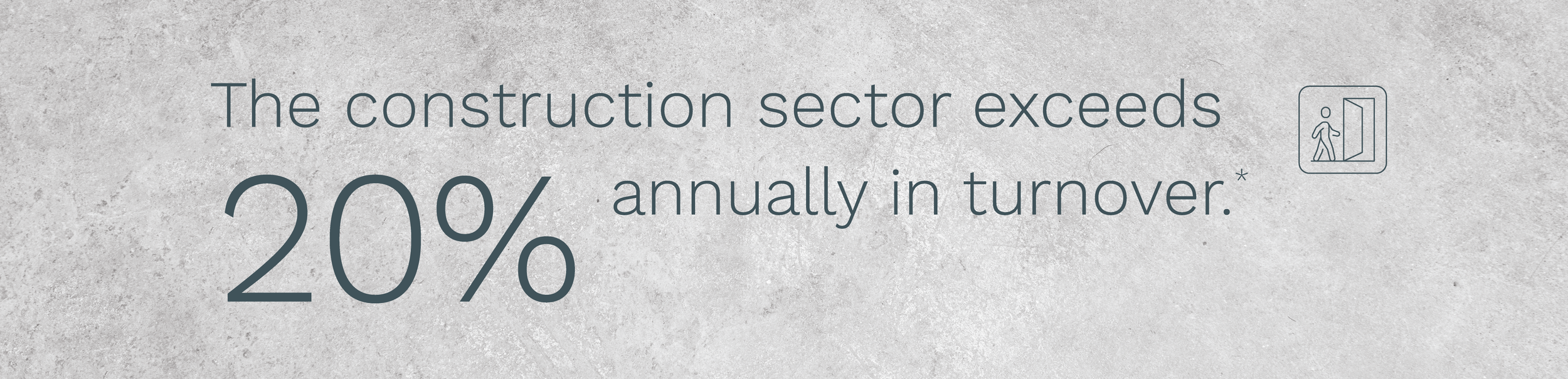
Industry data from Associated Builders and Contractors shows that workforce turnover in the construction sector routinely exceeds 20% annually, with some firms experiencing turnover rates as high as 38% among younger workers.
The modern workforce can no longer be swayed by compensation alone. Employees want to work for organizations where leadership is trustworthy, safety is prioritized, voices are empowered, and teams feel connected and aligned around a sharedpurpose and vision. That’s what makes a strong organizational culture your best recruiter.
Employees in positive company cultures are far less likely to job-hop, reducing recruitment, onboarding, and turnover costs. Additionally, employees strongly connected to culture are significantly more likely to feel ownership over product and service quality, which can also determine whether your company merely survives bid-to-bid or thrives as an employer and partner of choice. Construction companies who invest in their culture are in turn, also investing in one of the most effective recruitment strategies.
2. Productivity & Project Delivery
When communication breaks down, accountability becomes unclear, teams operate in silos, project performance and productivity suffers. Having a company culture that centers on open communication, collaboration, and accountability boosts employee engagement, which in turn can reduce silos, streamline decision-making processes, and encourage employees to work cohesively towards shared goals.
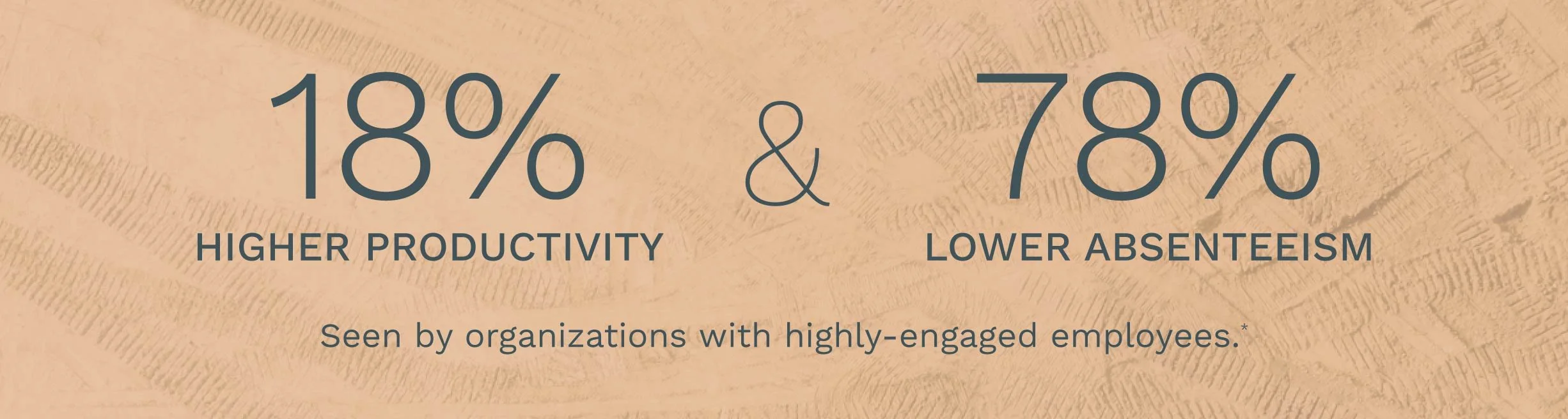
Gallup research indicates that organizations with highly-engaged employees experience 18% higher productivity and 78% lower absenteeism. This becomes especially important in high-pressure, high-risk environments where timelines are tight and project variables constantly change.
Teams aligned around shared values communicate better, solve problems faster, work more efficiently and deliver higher-quality outcomes. In other words, a strong construction company culture promotes operational stability that increases competitive edge.
3. Reputation & Profitability
Across most industries, clients and consumers are increasingly making decisions based on perceived company values, employee treatment, reliability, and trustworthiness. All of these experiences are shaped entirely through the culture and environments they create. This makes cultural alignment and employee engagement the strongest factors influencing brand perception and reputation.
Employees strongly connected to culture are significantly more likely to feel pride, ownership, and satisfaction in the quality of their work, which is directly linked to better performance and client outcomes.
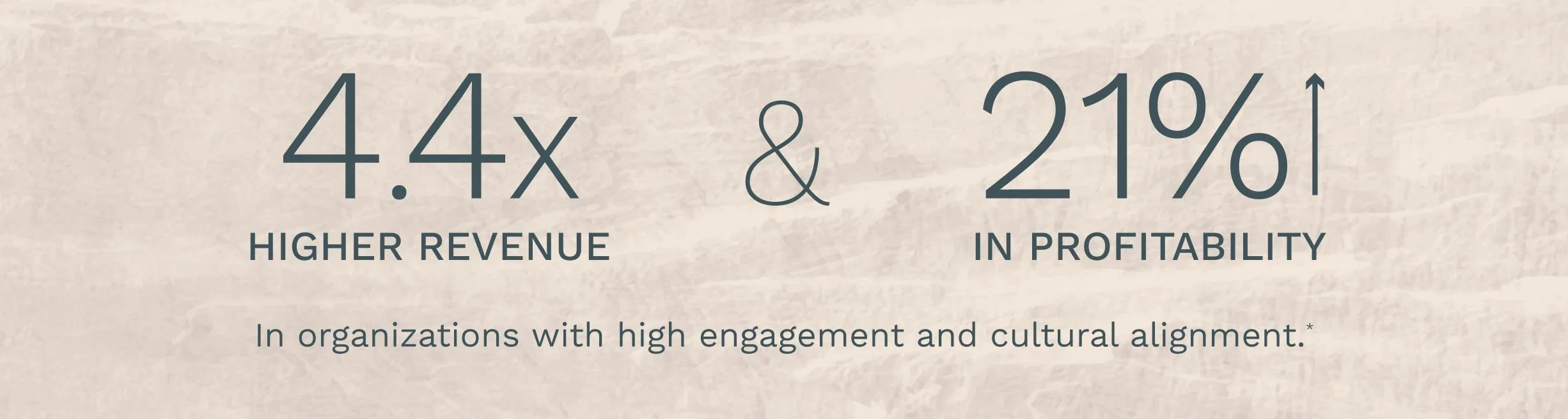
Research from AON shows that organizations with high engagement and cultural alignment see 4.4x higher revenue and a 21% increase in profitability.
This reinforces how a more engaged and motivated workforce builds stronger reputations and repeat business. Their successes become the company’s successes.
Turning Insight into Action
As the construction industry continues to evolve, culture is becoming one of the clearest indicators of long-term business strength. It may be difficult to measure at first glance, but its impact can be seen in every aspect of business performance. Through years of partnering with construction leaders across the country, we’ve seen how a commitment to building a strong culture pays dividends—creating unity and alignment within their organizations and bringing clarity and momentum to their brand in the marketplace.
But it’s important to understand culture is far from a set-it-and-forget-it strategy, it’s an ongoing project that requires continuous measurement and iteration to ensure it stays effective, relevant, resilient, and aligned with your people’s expectations.
The Impressive Impact of Culture on Construction
In construction, equipment depreciates, projects end, markets fluctuate. But culture is the one asset that compounds over time and can translate into real, measurable business outcomes. Strong cultures ultimately shape how companies perform, how they compete, how teams operate, and how brands are remembered. The organizations who treat culture as a strategic priority and harness this unbeatable advantage will see stronger teams, safer sites, better projects, and healthier bottom lines. For more on the impact of organizational culture in construction, watch leaders tell their stories of transformation here.